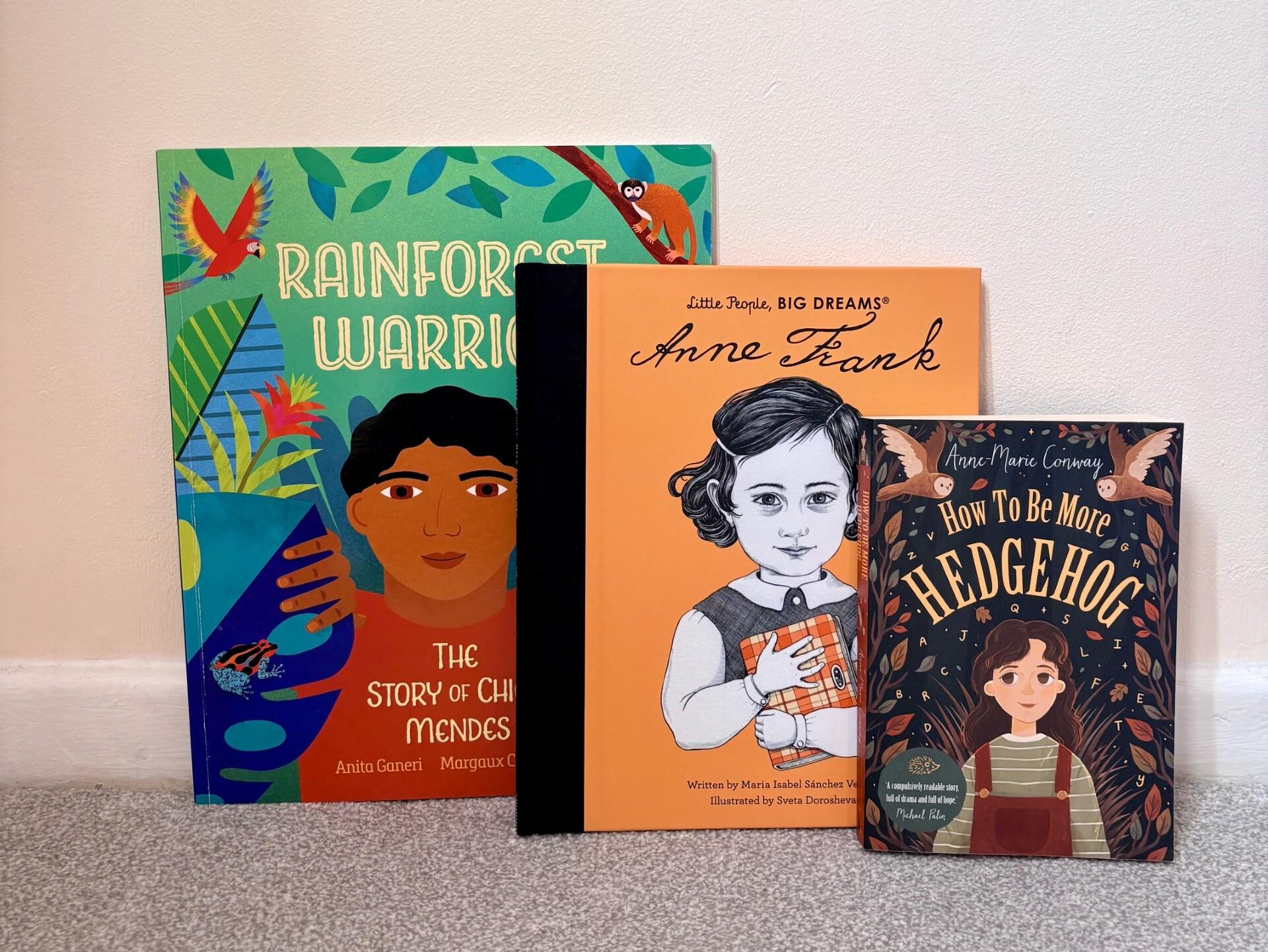
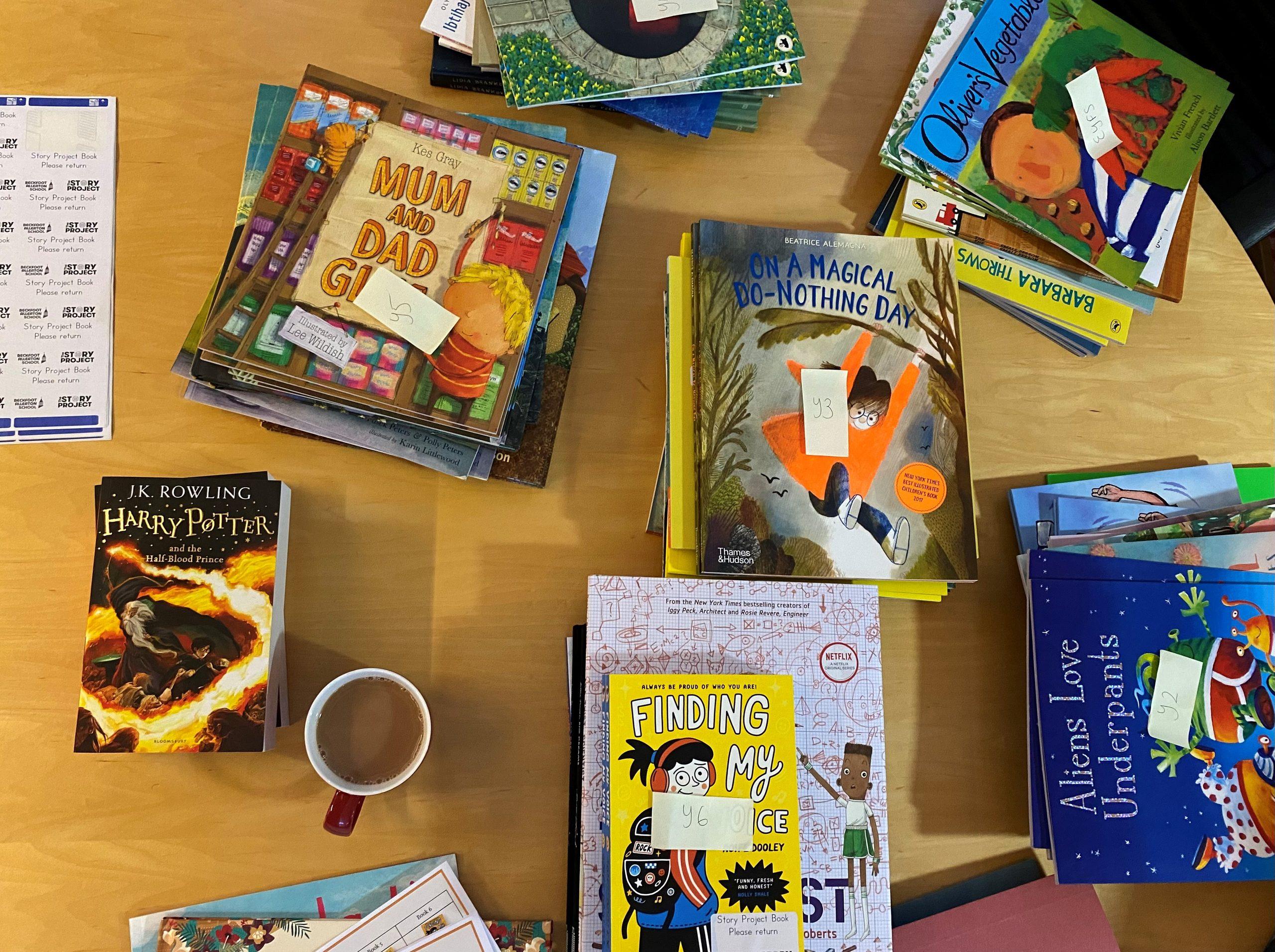
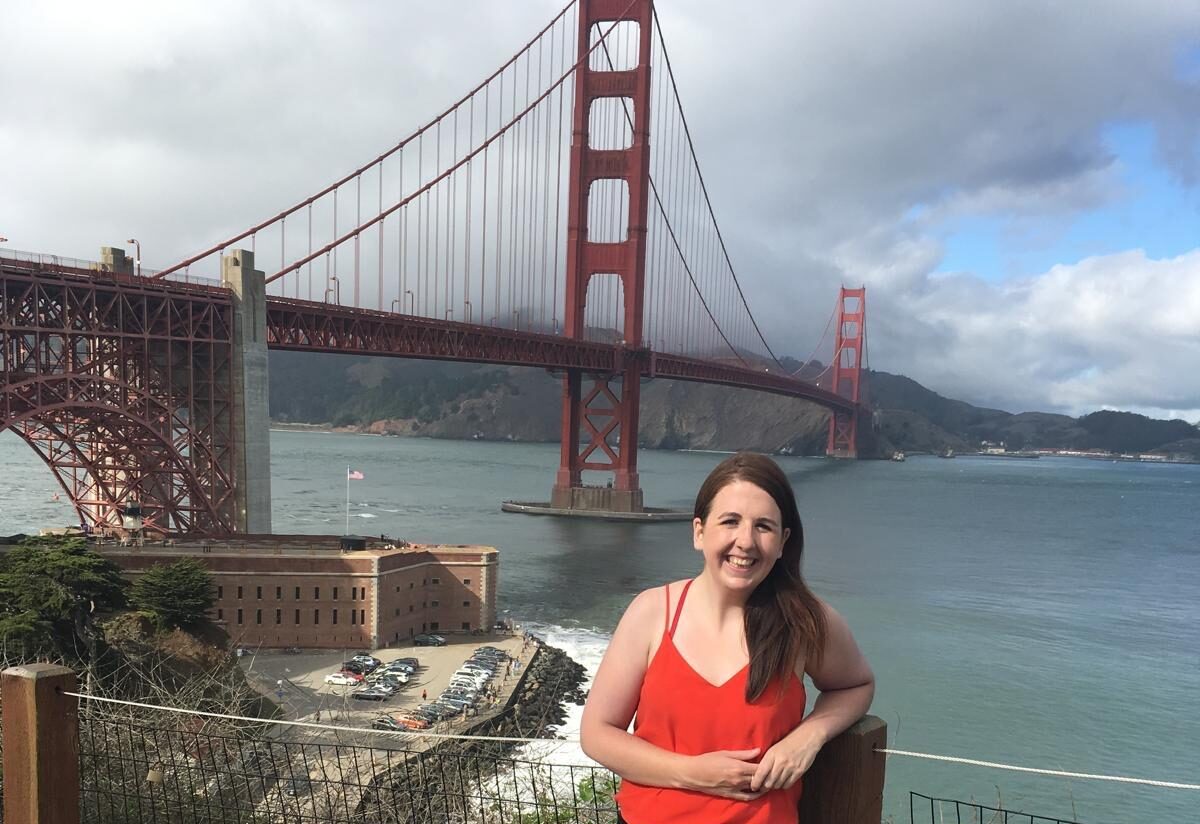
‘Do you write the books yourselves?’ A dive in to one of our most asked questions.

For anyone brand new to The Story Project, this question might surprise you. Perhaps you thought we wrote all of the books in our PSHE programme. You wouldn’t be the first! But the answer is an enthusiastic and carefully thought-through ‘no!’.
Sure, it might be easier to write them ourselves. Our team are highly skilled (if we do say so ourselves!) and it would certainly give us more creative control over the content of our books. But there is something much more important to us than an easy life and perfectly-shaped stories…
Why Real Books are the Perfect Vehicles for Exploring Wellbeing
Real stories are messy
Real books, like the ones you’d find on the shelves of your nearest book shop, are not perfectly shaped and molded to The Story Project’s needs. And that is WONDERFUL! The characters can be messy, they make mistakes, they get angry, they misunderstand. They show a breadth and depth of experience that better represents real life, and we love that.
Real authors help make our programme diverse
If we wrote all of the books in The Story Project curriculum they would all sound like us. They would be written within the context of our team’s life experiences, our backgrounds and our thoughts. Of course, we would do everything we can to ensure diversity and inclusivity, just as we do when we write our lesson plans and resources. But there is something magical about using books that have been created by lots and lots of different people. Real stories have a real level of authenticity; they bring a rich tapestry of stories, often told by people with lived experience.
Authors and illustrators are awesome!
Not only do our carefully curated book collections draw together diverse voices, but they are also written and illustrated by incredibly skillful people. Authors and artists who know how to convey complex themes in just a few short pages and images. What a lovely feeling it is to raise these professionals up, to champion the craft of storytelling and artistry. If we want children to be creative people who love reading when they grow up, then we need to involve and celebrate quality creative story outputs.

Real stories elevate the learning
Using real books written by real authors gives the lessons in The Story Project curriculum so much more credibility. ‘If this character is feeling XYZ, then it must be ok for me to feel like that too’….’if this character can stand up for what they believe in, then maybe I can to’.
Having the message conveyed by a third party, one that is beautifully told and illustrated, gives the learning a level of kudos and fanfare that we alone could not achieve. It is much easier to connect with something real and tangible.
Children connect to real stories
Seeing yourself reflected in the pages of a book is a really empowering experience, especially for our most underrepresented or vulnerable children. This is one of the most important and valuable reasons we use published books – because we want every single child to see themselves in The Story Project, to connect to the characters and to feel seen.
As a team, we often talk about one of our favourite examples of impact from the last few years, which was shared by an English Lead Teacher recently. She told us that after exploring the story ‘Grandad’s Camper’ by Harry Woodgate a young boy in her class felt confident to share photos of his same-sex parents’ recent wedding with his class. This was something he had felt too nervous to do previously. This is the best argument for using real books we have ever heard.
A new door to ‘reading for pleasure’
There is something really special about finding the next gem of a book for The Story Project. We spend hours on book research, trawling the shelves of bookshops, charity shops and online blogs. We do this to find those books that have a special quality about them, and there are so many out there. These books deserve to be in classrooms, and children deserve the chance to fall in love with them. We want to find that special title that is going to connect with that one child in your class who just doesn’t like reading; the one who really needs to find themselves in a story. Using real books makes that possible, because when children take part in a Story Project lesson it doesn’t feel like a literacy lesson. It feels like a discussion and an opportunity to share their thoughts; it opens up a new way to connect with books that doesn’t feel loaded with academic pressure. And that is a beautiful kind of magic that wouldn’t happen if we wrote everything ourselves.
See You in the Bookshop
So, while many of our team dream of the day they can put pen to paper and write their own books (have some of us dreamt of our acceptance speeches when we win the Children’s Booker Prize? Noooo, of course not!), that is not for now and not for The Story Project.
For now, we celebrate all the incredible books that line the shelves of our favourite bookshops. We lift them up and place them in the hands’ of as many children as we can.
Meet you at the bookshop?
What is The Story Project?
The Story Project is a social enterprise that uses the power of popular children’s books to teach children wellbeing skills and knowledge. Their fully comprehension and compliant PSHE programmes are designed for children in Nursery to Year 8.
Why Use Stories in PSHE?
Stories allow children to talk about wellbeing and key PSHE themes through the eyes of a character, rather than talking about themselves. This distance is really important and allows for a much richer and in depth discussion. More information about why The Story Project uses books can be found here.
What Books Would you Recommend for Talking about Wellbeing?
You can find all kinds of recommendations for books on our blog, please click here