2025–2026 Impact Report: Key Outcomes, Achievements and Community Impact
As a research-backed, evidence-based organisation, being able to see the measurable impact of our work is really important. It helps us to know where we are getting it right and where we want to make changes. In 2025-2026, we worked closely with researcher and education consultant Dr Alice Penfold to find out from teachers and children how The Story Project is impacting their teaching and learning.
We are delighted that the findings show a really positive picture; of how books support PSHE, RSHE and wellbeing education and how The Story Project is helping children to connect with learning.
Key Findings: How The Story Project is Supporting Schools
Access to the Curriculum
96.2% of teachers agreed or strongly agreed that The Story Project lessons enhanced RSHE outcomes for all pupils and 98.1% agreed or strongly agreed that pupils were better able to access the curriculum. 94.29% of teachers agreed or strongly agreed that they felt more confident delivering sensitive topics.
The resources support the teaching of PSHE and, as one teacher noted, “understanding of PSHE has grown a lot through TSP”. One teacher summarised the impact of The Story Project in a focus group as “a complete PSHE scheme that’s incredibly high quality.”
A lead teacher at one school told Dr Penfold, “The resources (including books, PowerPoints, Subject Leader tools etc) are all SUCH high quality, easy to access and use and all really straight forward. Everything is presented beautifully and clearly for both staff and children. I love the lesson structure and it has had a really positive impact for my class both in PSHE and in reading comprehension”.
Access to the Curriculum
Teachers reported feeling more confident delivering PSHE and RSHE content, supported by high-quality resources and carefully designed lessons. 98.1% of teachers agreed or strongly agreed that they had better access to the resources required to teach PSHE, RSHE and wellbeing to pupils.
One Lead Teacher noted that “The quality of the resources and curriculum is exceptional. They are thoughtfully designed, engaging and easy to implement, making it straightforward to deliver meaningful PSHE lessons with confidence. The training and ongoing support have been equally impressive—practical, informative and responsive to the needs of schools. It’s clear that a great deal of care and expertise has gone into every aspect of The Story Project, and it has made a real difference to both staff confidence and pupil engagement”
91.5% of teachers also agreed or strongly agreed that they felt more confident when engaging parents and carers in discussions about PSHE, RSHE, and wellbeing. Many schools had received positive feedback from parents and carers, such as improvements in children’s self-regulation. In a focus group, one teacher shared that “parents were highly impressed” and “some wanted to purchase the books for home”.
Development of Emotional Literacy and Pupil Wellbeing
Feedback from schools indicates an improvement in children’s emotional literacy, including naming and noticing feelings, understanding different and often complex emotions and using strategies to manage them: 99.1% of teachers agreed or strongly agreed that their pupils felt more confident using a range of emotional vocabulary. This demonstrates a strong improvement on the previous year, when this figure was 76.6%.
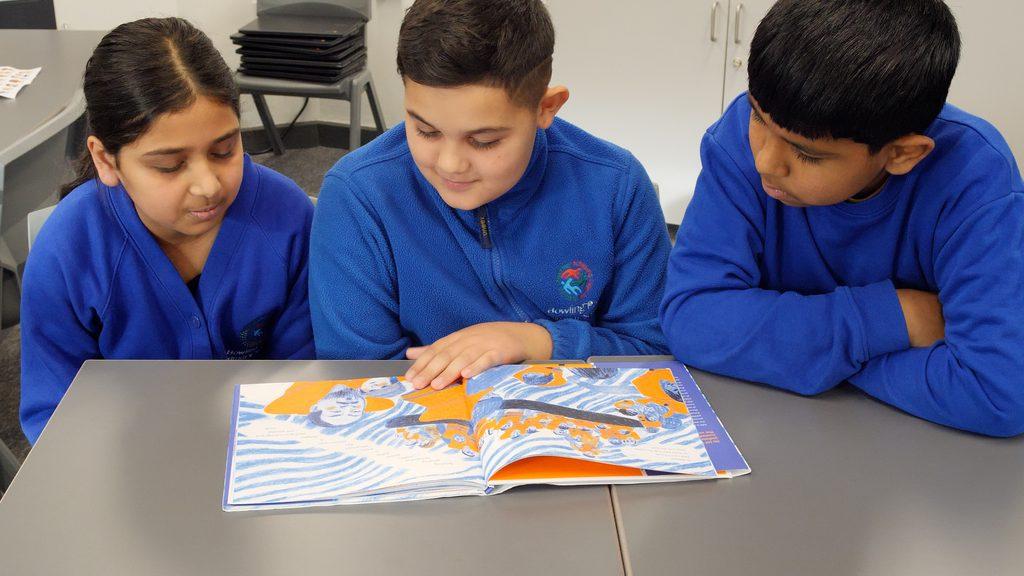
Focus group participants reflected on the impact that the sessions had on children’s ability to recognise, understand, and express emotions. One teacher noted the “significant growth in children’s emotional vocabulary”, whilst another observed that their pupils “can articulate their feelings much more effectively”. It was clear from the data that children, particularly in older year groups, developed an understanding of more complex emotions. A Year 2 teacher reported that their “Year 2 pupils learned that people can experience multiple emotions simultaneously”.
99% of teachers agreed or strongly agreed that The Story Project lessons support their pupils’ wellbeing. Feedback from children suggested an improved understanding of what wellbeing is, with multiple pupils describing it as being “happy”, “healthy” and “safe”. Pupils were also more able to understand a range of factors that influence their wellbeing including, “sleeping well helps us stay focused”, “exercise makes you healthy”, eating healthy improves wellbeing” and “go outside into nature”.
Development of Pupils Self-Regulation
Dr Penfold’s research found that 99.1% of teachers agreed or strongly agreed that The Story Project lessons supported their pupils to gain the skills and knowledge to support their own wellbeing. Reflecting on their learning after each unit, pupils reported to have “learnt that everyone has worries sometimes” and “you can feel many different emotions at once”.
98.1% of teachers agreed or strongly agreed that their pupils were more comfortable discussing their wellbeing needs in class following The Story Project sessions. This was an increase from the previous year’s data, when this figure was 81.8%.
Improved Reading and Vocabulary
Teachers identified that engagement with The Story Project improved pupils’ literacy, and 95.3% agreed or strongly agreed it enhanced literacy outcomes for all pupils. They reported evidence of richer reading responses, the application of vocabulary from the units and an enhanced ability to provide detailed responses about texts and characters’ feelings.
In the focus groups, teachers reflected on the ways that The Story Project supported wider school priorities. Teachers noted that it “supports literacy”, “fits naturally alongside literacy priorities” and the “vocabulary transfers into reading lessons”. One teacher praised the impact in the classroom for all pupils, including for “children who would struggle with vocabulary” and who now “have come up with better describing words”.
Developing Empathy and Positive Relationships
Findings from the research showed that children directly benefitted from increased empathy and respect, with 98.1% agreeing or strongly agreeing. One teacher reported that The Story Project “builds confidence and gives every child a voice through storytelling”, with other teachers praising the “greater empathy across the school” as well as the “improved respect and understanding within the classroom” as a result of engaging with the sessions. Teachers noted that the stories provided meaningful starting points for conversations and a safe space for discussion.

Feedback from the focus groups also highlights the impact of The Story Project on relational behaviour approaches and self-regulation. For instance, a child who was struggling was able to independently say: “I feel really frustrated right now… I need a minute.”
Improved Awareness of How to Stay Safe and Discussion of Sensitive Topics
Teachers reported a development in children’s confidence and understanding of safety and proactive behaviours. Multiple schools fed back on children’s improved learning about online scams and who to speak to for help. Children shared a range of takeaways from online safety sessions, including to “check with adults first”, “don’t give away personal information”, “don’t trust everybody online” and “having time away from a screen is good for us”.
Teachers and children had similarly positive takeaways about other topics related to staying safe, such as first aid and finances. One teacher shared that the first aid units provided “key important knowledge for real life”. Another teacher noted that children were able to link their learning about financial risk “to real-life adult situations”.
Teachers valued how much The Story Project sessions and resources increased their own confidence to approach real-life issues that affect pupils’ mental and physical health, with 91.89% of teachers agreeing or strongly agreeing that that felt more confident in addressing questions and concerns from pupils related to wellbeing.
The Power of Inclusive and Diverse Stories
97.2% of teachers agreed or strongly agreed that they felt more confident creating an inclusive and supportive classroom environment as a result of the programme.
Teachers recognised the impact of using stories as a bridge to discuss sensitive topics and personal experiences. Focus group teachers reported that the “Stories provide a safer way to share personal thoughts and feelings” and it was “easier talking about a character”. According to teachers, the texts are “high quality”, “meaningful”, “diverse” and “build empathy, confidence and a sense of belonging”.
The feedback on individual units shows the impact of inclusive representation on children’s attitudes. Feedback from schools highlights key learning points for children, including that “families can be different”, “how to help someone experiencing grief”, “what a stereotype was” and “how to be respectful to others”. The careful and diverse text choices also helped children to learn about bullying, the importance of being “an upstander, not a bystander” and that “(b)eing part of a community can help make us feel safer and more included”.
Well-structured Sessions and Creative, Multimodal Pedagogies
Teachers provided consistently positive feedback on the methods used to approach the books in each unit. One teacher shared in the end of year feedback that what they valued most about The Story Project was its “variety of activities”, describing the programme as “interactive, engaging, informative”.
Feedback from schools on individual units demonstrates an appreciation for the variety of pedagogical approaches embedded into the resources. These include pair and group discussions, drawing, role play, acting, freeze frames, posters, listening to the stories, as well as hands-on activities such as creating a wellbeing jar and thank you cards. As an example, one pupil reflected on the ‘ladder activity’ used to recognise escalating feelings, it “helped me realise there are small steps to achieve a goal”.
The flexibility of the resources was repeeatedly praised by schools, including one teacher’s reflection that there are “activity choices so that you can tailor it to your class”. As one Lead Teacher celebrated “Our children actually look forward to PSHE… I think they don’t see it as learning”
How This Impact Data was Collected
The research uses data gathered from pupils and teachers during the 2025-2026 academic year. It was guided by the following research questions:
- To what extent does The Story Project improve children’s emotional literacy and
wellbeing? - How far does The Story Project strengthen children’s knowledge of, and confidence to
discuss, real-life issues? - To what extent does The Story Project improve children’s literacy?
- What impact does The Story Project’s work have on teaching staff?
A mixed-methods approach was used to explore the impact of The Story Project, drawing on qualitative and quantitative data and combining teacher surveys, pupil feedback, focus groups, end-of-unit reflections and conference evaluations to build a comprehensive picture of the impact that the programme has had in participating primary schools. The results are based on:
| Data Type | Number of Teachers | Number of Pupils |
| End of Year Surveys | 111 | / |
| Focus Groups | 12 | / |
| End of Unit Data | 30 | 30 |
| Conference Feedback | 18 | / |
FAQs
What is The Story Project?
The Story Project is a social enterprise that uses popular picture books to help children explore the world around them, build empathy and understand themselves. Through its research-backed curriculums, children not only build a love of reading but also acquire the skills for lifelong positive wellbeing.
What Programmes Does The Story Project Have?
The Story Project has programmes from Nursery up to Year 8. All are book-led and research-backed. Contact us on info@story-project.co.uk to find out more.
Does The Story Project Cover all the Statutory Requirements for RSHE?
Yes! In our primary programme, all the statutory RSHE requirements are covered.