Getting Ahead of the Milburn Report: How Schools can Support Children at Risk of NEET Now.
Written by Fiona McCrudden
A recently released report by former minister Alan Milburn has called for radical changes in education to support more young people to find work or further education.
From better family hub access to lower exclusion rates, the report’s recommendations are wide ranging. It isn’t clear yet how these recommendations will come to manifest themselves in education policy and indeed whether anything will change.
However, if you work with children you probably won’t have needed the findings of this report to see how urgent many of the recommendations are. Like our team, you’ll have seen countless students who are ambitious and who have plans for the future. The NEET (‘Not in Education, Employment or Training’) crisis is not a lack of children wanting to do something with their lives, far from it. It is a failing of systems; of a collection of barriers that have held children back from their earliest points all the way through to secondary and college. This is especially apparent for children from areas of deprivation.
In recent years, we’ve worked closely with Living Well Schools on this very idea. Inspired by the children of inner-city Bradford, but equally applicable to many areas across the UK, we produced a special 3-part resource. Using the magic of stories, the resource gives real depth to the topic of aspirations. Because, having aspirations isn’t just about having a dream, it’s about knowing how to get it when it seems a million miles away.
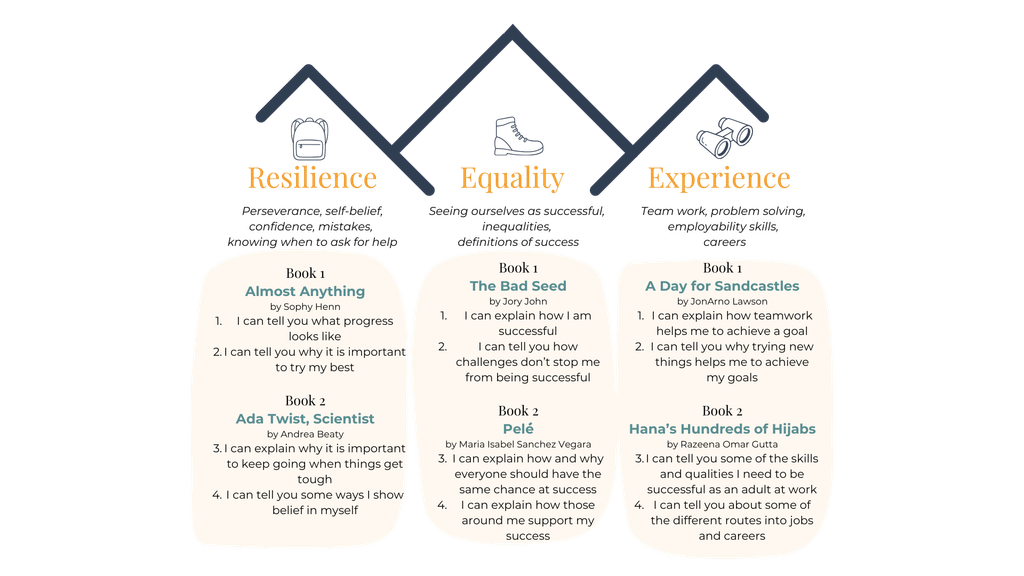
The programme is split into three key themes that underpin aspirations. Within each theme there are two books, each covering two objectives. The lessons can be adapted for us in assemblies, classes or as small group interventions.
While we have welcomed many of the recommendations in the Milburn report, this work cannot wait and education reform takes time. So if, like us, you want to get ahead of the game and support children now, please download our resources.
Members can access it through the membership page, and new schools can sign up to a no-obligation free trial. This gives you access to the aspirations resources, as well as two full units from The Story Project.
What is The Story Project?
The Story Project is a social enterprise dedicated to using stories to teach PSHE and wellbeing. From Nursery to Year 8, its teacher-led and research-programmes help children to learn in a safe and engaging way. Find out more The Story Project
What can I expect from the aspirations lessons?
The programme is split into three key themes that underpin aspirations. Within each theme there are two books, each covering two objectives. The lessons can be adapted for us in assemblies, classes or as small group interventions. All lessons follow The Story Project’s unique S.T.O.R.Y. structure; linking with key RSE and literacy skills and ensuring children have opportunity for discussion, critical thinking and reflection. Teachers find Story Project lessons engaging, easy-to-implement and supportive.
Why was the Milburn Report commissioned?
The Milburn Report was written in response to the worrying fact that a high percentage of young people in the UK are NEET, which stands for ‘Not in Education, Employment or Training’. Around 13.5% of people aged 16-24 are currently classed as NEET, one of the highest rates in Europe. The report aimed to find out why this was and to recommend changes that support more children to access education or employment. The recommendations are to form a 10 year plan to ensure long term, sustainable change.
What did the Milburn Report recommend?
The Milburn report recommended a whole host of changes to employment, health and education policy. Here are a few of the highlights:
- Extending the existing jobs youth grant which encourages employers to give jobs to those on universal credit.
- Investment in early years, including family hubs.
- Increase targets for ‘Good Level of Development’ (GLD) in Reception and end of KS2 expectations to 90%.
- More diagnostic checks in writing, maths and oracy to help identify at risk pupils.
- Decrease the percentage of children being permanently excluded.
- A stronger focus on children’s preparedness for work.
- Much quicker access to mental health assistance.
- Opportunity and support guarantees for young people.